
A successful workplace wellness event depends on more than a selection of services. Understanding how many guests can participate, how long appointments take and where people will wait helps create an experience that feels relaxed rather than rushed.
Corporate wellness event planning in Toronto starts with a simple capacity question: how many people can comfortably participate in the time available? Before choosing a nail bar, seated chair massage station or short hand-care experience, estimate the minutes each guest needs, the number of practitioners working at once, and the gaps between appointments. Those choices determine whether your event feels welcoming or unexpectedly crowded.
A well-planned wellness station should be easy for employees to understand, easy for organizers to coordinate and genuinely pleasant for the people receiving services. That takes more than a treatment menu. It takes thoughtful pacing, a realistic floor plan and clear communication with the provider.
Corporate wellness event planning begins with the guest experience
Start by deciding what participation means. Are you offering each employee one short service, a choice between two stations, or the opportunity to try both? The answer affects staffing, scheduling and the length of the event. Offering everyone two services is a very different commitment from inviting guests to choose one.
Consider the setting, too. A staff appreciation afternoon at a small office can have a simple sign-up sheet and a compact treatment area. A busy conference lounge needs clearer queue management, especially when attendees arrive in waves between sessions.
At Opalya, we plan on-site beauty and wellness experiences around the room and the audience rather than assuming every event should use the same format. The events and corporate services page introduces the types of experiences that can be adapted to workplaces and venues.
Estimate how many guests each practitioner can serve
Capacity is easier to understand when you work backwards from the available time. A practitioner providing a ten-minute service has a theoretical maximum of six guests per hour. A five-minute service has a theoretical maximum of twelve. Real event planning should allow time for people to sit down, discuss preferences, clean or reset the station and move on.
For example, a two-hour activation with three nail technicians offering ten-minute services has a theoretical ceiling of 36 appointments. That is not a promise of 36 completed services. If an organizer wants a relaxed pace, a sensible working target may be lower after accounting for transitions.
If you need to serve a large group, consider whether a shorter service can still deliver an enjoyable experience. Do not shrink a full manicure into a time slot that cannot reasonably accommodate it. Instead, choose an express service designed for events.
Use a simple capacity formula
Multiply available service minutes by the number of practitioners, then divide by the minutes allocated per guest. For three practitioners over two hours, you have 360 theoretical practitioner-minutes. At ten minutes per service, the mathematical maximum is 36 guests. Adjust downward for setup, transitions, sanitation and breaks.
Treat this as planning arithmetic, not a guarantee. The layout, treatment type and arrival pattern all affect what is practical.
Choose the right mix of wellness stations
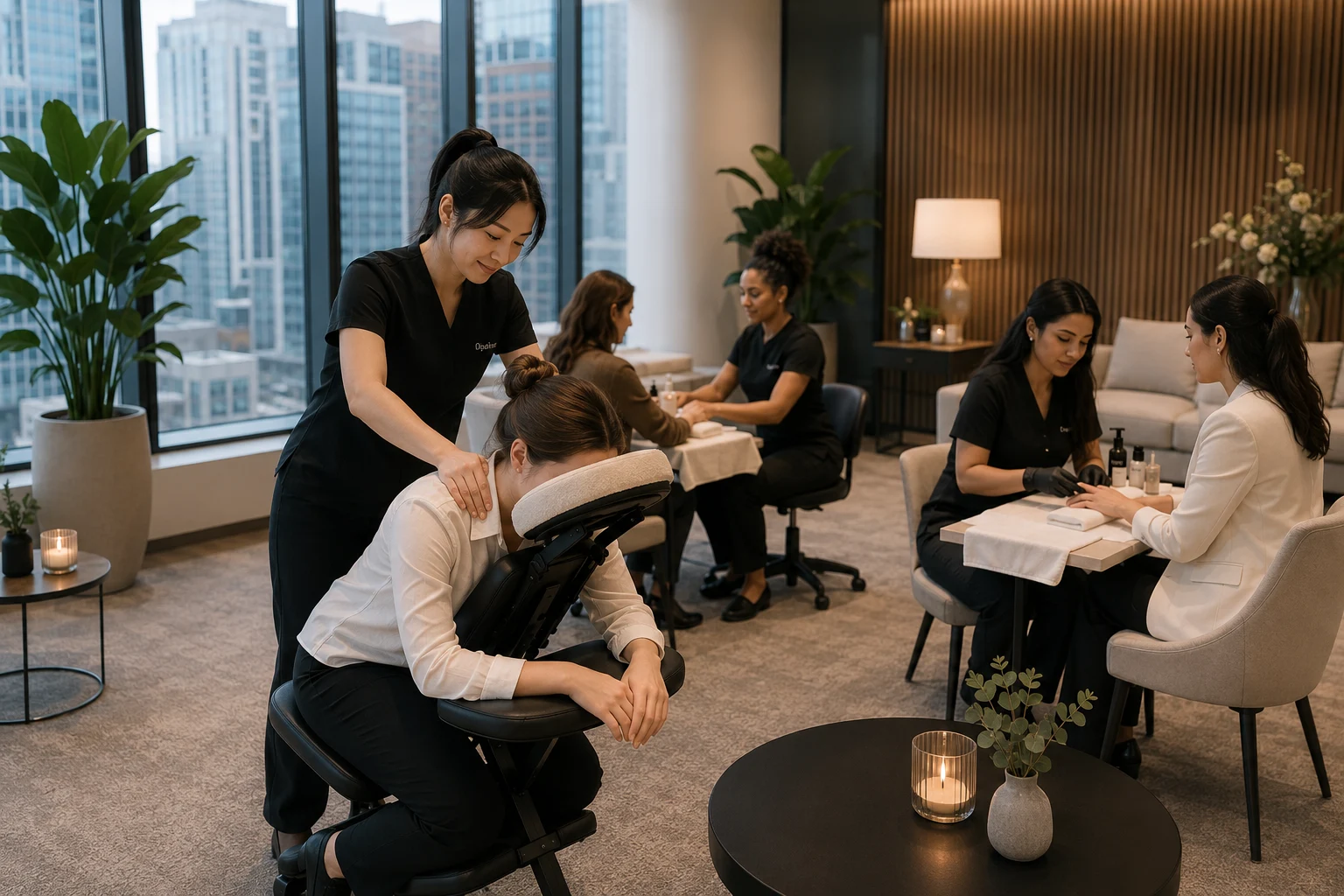
A good station menu offers choice without making the event harder to run. Nail care, hand-focused relaxation services and chair massage can each fit a different format, but they also demand different amounts of space, equipment and professional staffing.
An express nail bar
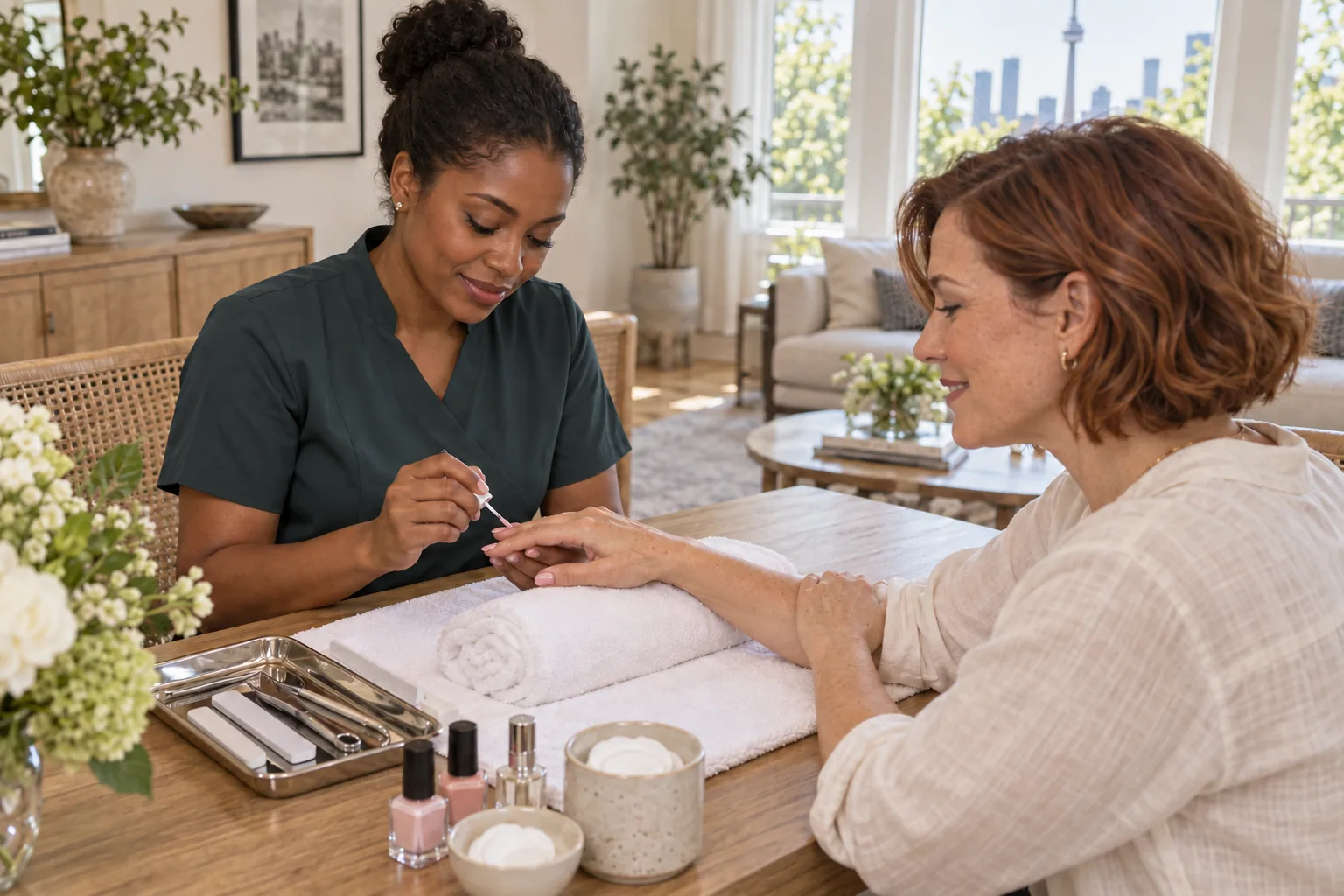
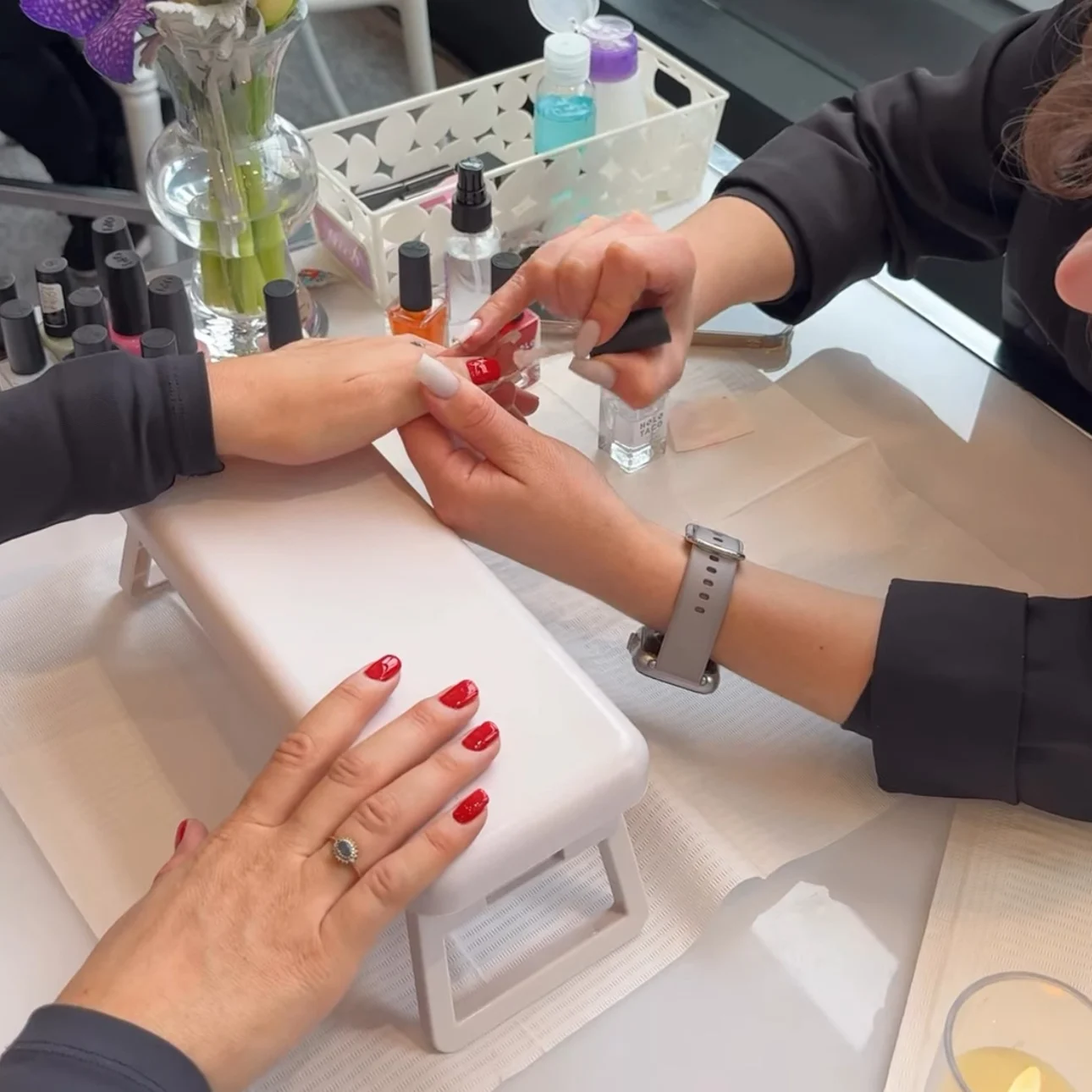
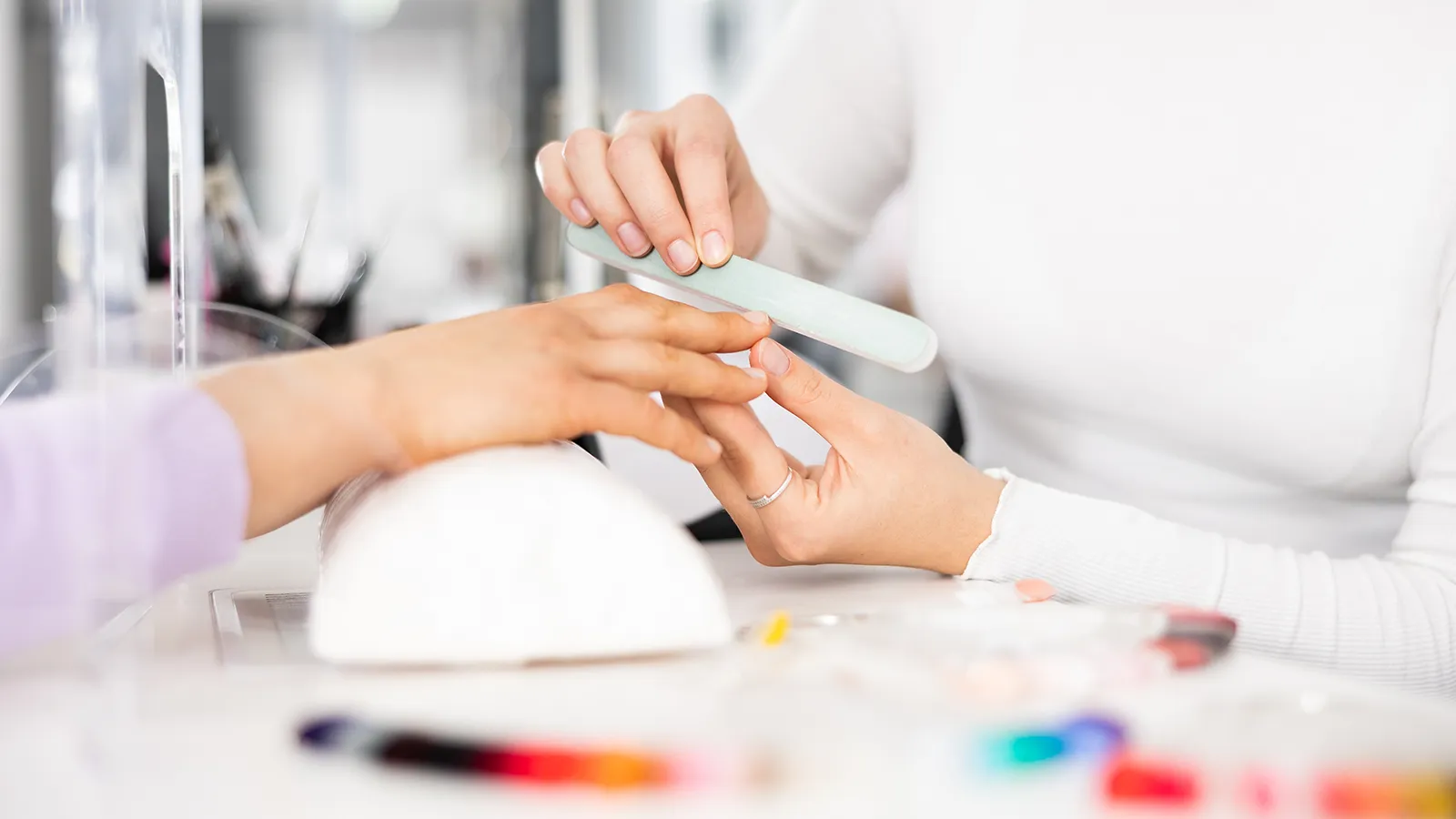
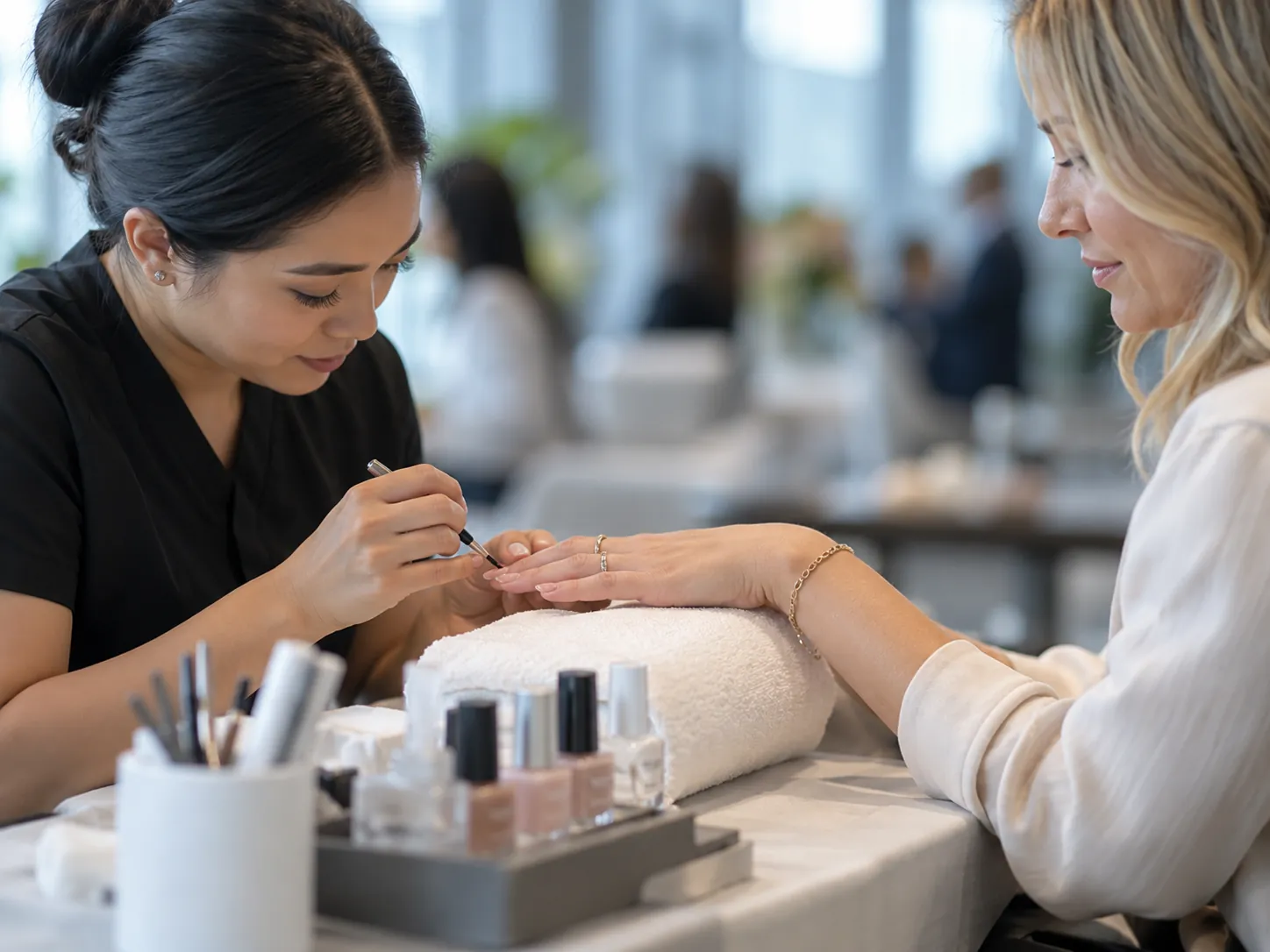
An express nail bar suits events where attendees enjoy a visible, social beauty experience. It needs suitable tables, chairs, lighting and a clean working surface. Decide in advance which nail services can be completed within the event's time slots. Polish options, drying considerations and any finishing details should be planned rather than improvised.
Short hand-care and relaxation moments
A brief hand-focused experience can suit offices where employees rotate through between meetings. Frame these services as comfort and relaxation. They are not a substitute for medical care or clinical treatment, and the event description should avoid promising therapeutic outcomes.
Chair massage with appropriately qualified providers
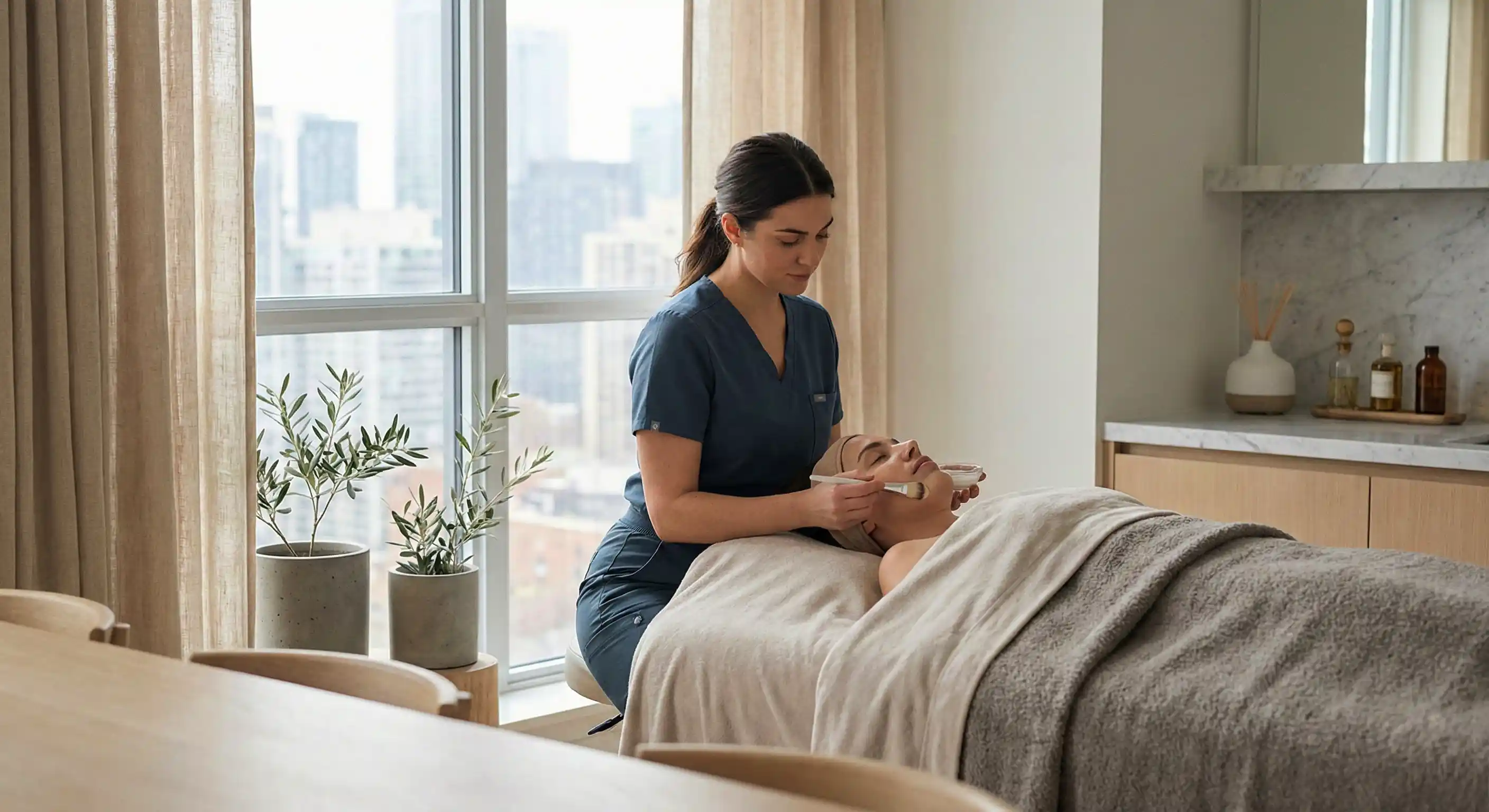
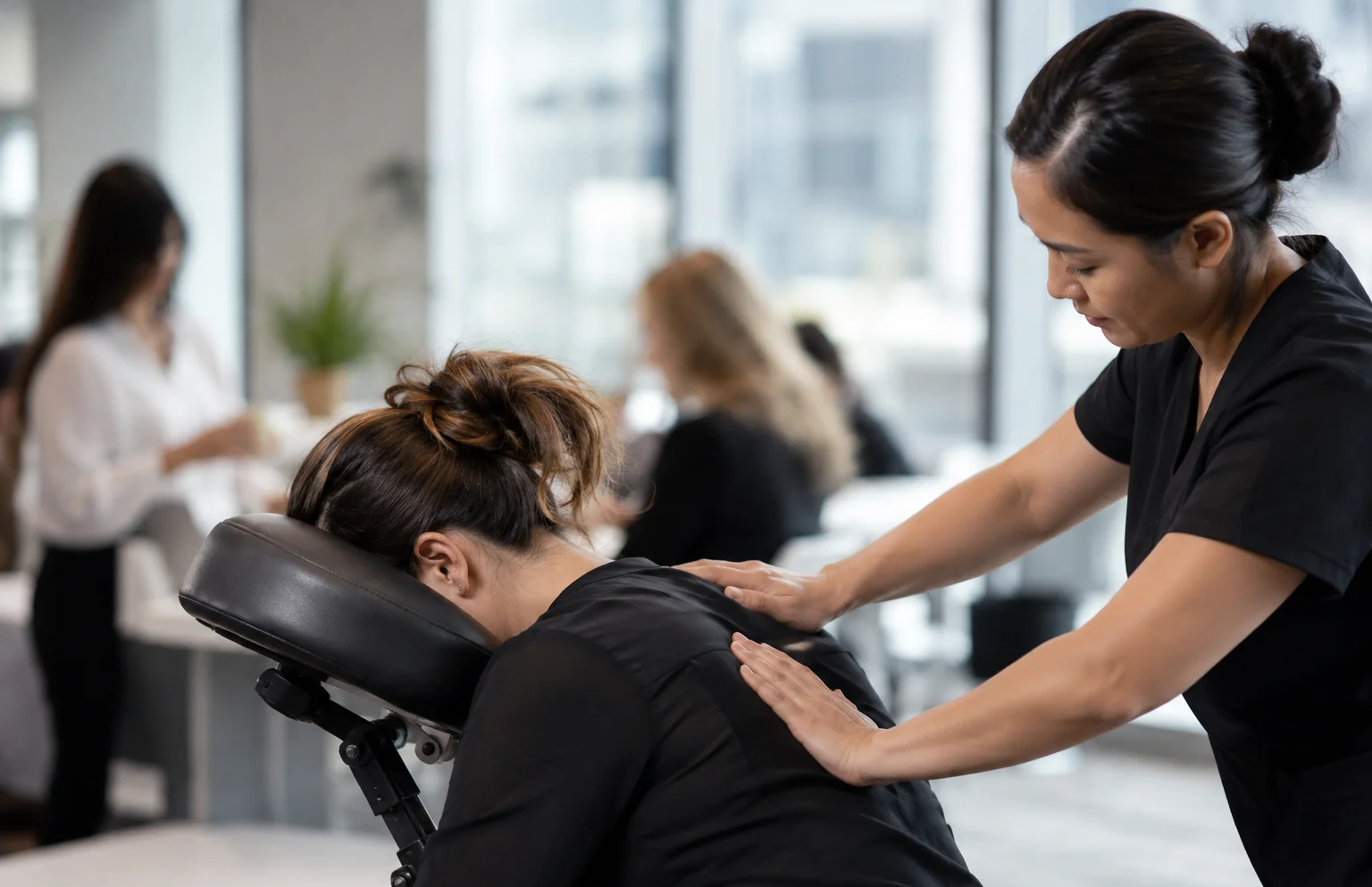
Chair massage can provide a different experience from a nail bar. If the event is marketed as registered massage therapy, confirm that providers are Registered Massage Therapists and describe their credentials accurately. Where a provider offers a nonclinical relaxation service, use language that reflects what is actually being delivered.
One station of each type can be more engaging than several identical stations, but the capacity of the slower station may create a queue. Work out each station's throughput independently, then decide whether guests will choose between options or rotate through both.
Plan around arrivals, not just total attendance
An office may have 80 employees, but they will rarely arrive evenly across a three-hour window. A conference can become busiest immediately after a keynote, while an appreciation day may have quieter periods between departmental breaks. This matters more than the raw headcount.
Ask the event organizer for the expected high-traffic periods. If the busiest period is a single hour, place more capacity there where practical, or set expectations about how many people can be served during that window.
First-come, first-served or appointment slots?
First-come, first-served works when the activation is open, informal and optional. Clear signs with approximate service lengths help guests decide whether to join. A sign-up list or scheduled time slots work better when participation needs to fit around shifts, presentations or meetings.
A hybrid approach can be especially useful. Reserve scheduled times for employees with limited breaks and leave some capacity for walk-ins. Whatever approach you choose, communicate it before guests arrive rather than letting the queue become the explanation.
Give each station enough room
A wellness activation should not obstruct ordinary office movement. Provide an accessible route to each station, enough space for providers to move around guests and a place for people to wait without blocking doors or corridors.
Ask providers about electrical access, stable tables, chairs, water needs and any equipment that must be transported through the building. A clear route from loading or parking to the event floor is helpful, particularly in downtown Toronto towers where visitor registration and elevator access may take extra coordination.
A visually appealing setup matters, but function should come first. Lighting that allows careful work and seating that keeps guests comfortable are more valuable than elaborate decorations that leave little room for the service.
Make the experience feel relaxed without losing structure
Good event operations should largely disappear into the background. Guests should know where to go, how long the service will take and what happens next. Providers should know who is coordinating the schedule and whom to contact if attendance changes.
Brief the team before the event starts. Confirm the offered services, timing, any restrictions, break arrangements and the plan for late arrivals. Use consistent language on menus and signs. A guest choosing a five-minute experience should not discover at the station that the service takes twice as long.
If someone arrives after capacity has been reached, a clear and respectful explanation is better than keeping an unrealistic queue open. Providing a small number of good experiences is preferable to rushing everyone through a service.
Common planning mistakes worth avoiding
The first is assuming every attendee will want the same treatment. Some people may prefer nail care, while others are interested in a brief relaxation service or simply observing the activation. Choice is part of making the experience inclusive.
The second is counting every minute of an event as uninterrupted service time. Setup, transitions and cleanup exist even when the schedule does not show them. Build those realities into the plan before calculating how many guests can participate.
The third is overlooking communication with the venue. Workplace building access, event-room availability and staffing procedures vary. Confirm them early so providers arrive ready to work rather than solve logistics at the reception desk.
Finally, avoid equating a bigger menu with a better event. A small number of carefully selected services can create a more comfortable experience and clearer guest expectations.
How to brief a mobile spa provider in Toronto
A useful inquiry includes the event date, location, expected guest count, active service window, estimated busiest period and the kind of experiences you want. Mention whether every guest must be served or whether participation is optional. These details allow a provider to recommend a staffing model rather than guess.
It is also worth clarifying whether the event is held at an office, hotel or temporary venue. For hospitality or larger gatherings, the preparation can differ from a standard workplace visit. You can review how mobile services fit into hotel settings or browse other experience-led event ideas if you are still deciding on the format.
Frequently asked questions
How many practitioners do we need for 50 guests?
It depends on whether each guest receives one or several services, the length of each treatment and the available window. For a ten-minute service, a single practitioner can theoretically serve six people per hour before transitions. Use that baseline to calculate your plan, then account for realistic downtime.
Are wellness stations suitable for a two-hour event?
Yes, provided the services and staffing fit the available time. Express formats can work well. A group expecting everyone to receive multiple lengthy treatments may need a longer window or more providers.
Should we require advance bookings?
Advance slots help if employees have fixed breaks or if attendance is high. Walk-in participation may feel more welcoming at a casual event. A hybrid schedule can support both.
What information should we send the provider first?
Share the event date, exact address, expected attendance, event hours, preferred services, access information and any room constraints. Mention the busiest period if you know it.
Bring the planning and the experience together
A successful wellness event is one where guests feel cared for and organizers know the day is under control. Start with honest capacity calculations, choose a manageable service menu and create a clear flow from arrival to finish. If you are planning an office or event activation across Toronto and the GTA, Opalya can help shape a format that suits your people and your space.